

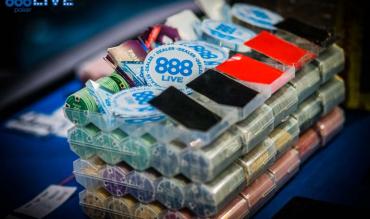

A table, cards, and poker chips are the foundation of any home game. These six poker accessories are the add-ons that make a poker night run more smoothly, look more professional, and feel closer to the real thing.
1. Chip Racks: Organisation and Storage
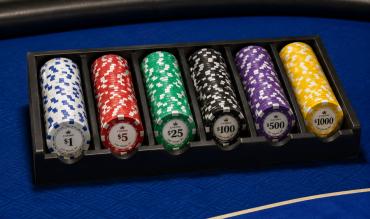
A chip rack is a slotted tray used to organise, count, and distribute poker chips. Each rack holds 100 chips in five columns of 20.
Any home game with more than one chip denomination benefits from racks. They make it faster to count out buy-ins, easier to reload between hands, and simpler to pack away at the end of the night. Without them, counting chips by hand before and after every session adds unnecessary time to the game.
Clear acrylic racks are the standard choice. A set of 10 racks holds 1,000 chips total – sufficient for most home game setups. For regular games, keep the racks loaded between sessions so setup is immediate.
2. Dealer Button: Tracking Position at the Table

A dealer button marks the nominal dealer position at the table. In any blind-based game – including Texas Hold'em and Omaha – a dealer button is required. It determines posting order, dealing order, and acting order on every street.
Most chip sets include a basic plastic button. Upgrade options include heavier acrylic or metal buttons, oversized puck-style buttons, and decorative designs. The material and size don't affect gameplay, but a heavier button is harder to knock out of position accidentally.
For home tournaments, dealer buttons with a built-in blind timer are available. These display the current level, count down to the next blind increase, and sound an alert when blinds go up. They remove the need for a separate device and keep the structure visible to everyone at the table.
Rule: without a dealer button, position and posting order must be tracked verbally, which slows the game and causes disputes. Even a coin works in a pinch, but a proper button is the correct tool.
3. Chip Cases: Storage and Transport Options
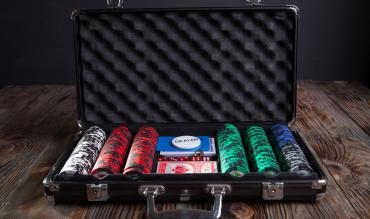
A poker chip case is a container designed to store and transport a chip set. Most chip sets include a bundled case, but aftermarket cases offer better durability, capacity, and build quality.
The right case depends on how the chips are used. For a permanent home setup, an acrylic rack-style case keeps chips loaded and ready – pull it out, and the game is set up in seconds. For players who move their set between locations, a hard case with locking metal latches provides better protection in transit.
Key criteria: the case must fit the full chip count, close securely without chips shifting, and have a handle sturdy enough to carry at full weight. A case that rattles or doesn't latch correctly is a liability, not an asset. Check capacity and dimensions before buying – chip sets and chip cases are not universally sized.
4. What Is a Dealer Tray Used For?

A dealer tray is a chip tray that slots into the dedicated opening built into the dealer's position on a purpose-made poker table. It gives the dealer a fixed location to hold chips during play, making it easier to manage the pot, make change, and process payouts.
Not all home tables have a dealer tray slot. If yours does, filling it is a low-cost upgrade that gives the game a cleaner look and keeps the dealer's chips separate from the pot. If yours doesn't, a dealer tray isn't needed.
Rule: measure the tray opening on your table before purchasing. Dealer trays are not a standard size, and a tray that doesn't fit the slot is unusable.
5. Should You Use Drink Coasters at a Poker Table?
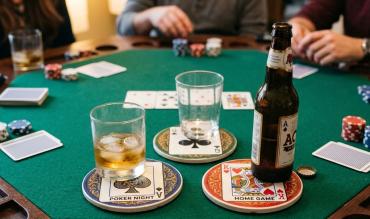
Drink coasters protect the table surface from moisture rings and reduce the risk of liquid reaching chips and cards. They're essential for any game played on a kitchen or dining table. On a dedicated poker table with built-in cup holders, coasters are optional, but only if the holders are deep enough and positioned well away from the playing area.
Many built-in cup holders are too shallow to hold a full glass securely, or are positioned in the rail directly next to the cards. In both cases, a spill is a realistic risk. A coaster on a side table is a safer setup than a drink balanced in a shallow rail holder.
For the poker room aesthetic, purpose-made poker coasters with card suit or chip designs are a cheap and thematic option. Marble or stone coasters work for a cleaner, more neutral look. Either way, the function matters more than the design.
6. What Are Poker Side Tables and Are They Worth It?
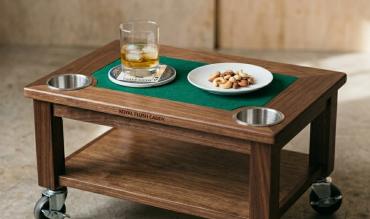
A poker side table is a small wheeled table with built-in cup holders, positioned beside a player's seat to hold drinks and snacks away from the felt. Casino poker rooms use them as standard because keeping liquids off the table protects both cards and the playing surface.
For a home game, side tables solve the drink problem entirely. They eliminate the need for rail cup holders, remove the spill risk from the table area, and give each player their own space for a drink and a snack without crowding the chip stacks.
Side tables are the best long-term solution for regular home games. They're more practical than coasters, remove drinks from the playing area completely, and add a professional look to the setup. Stainless steel cup holders are the most durable option.
Key Takeaways
- A chip rack holds 100 chips in five columns of 20. Ten racks store 1,000 chips and make setup and teardown significantly faster.
- A dealer button is required in any blind-based game. Timer-equipped buttons are worth considering for home tournaments.
- Choose a chip case based on use: acrylic rack cases for permanent home setups, hard latching cases for portable use.
- A dealer tray only works if your table has a tray slot. Measure the opening before buying.
- Coasters are essential on non-poker tables. On tables with rail cup holders, they're still the safer option if the holders are shallow or poorly positioned.
- Poker side tables keep drinks off the felt entirely. For regular home games, they're the most practical long-term solution.
