



Many poker players dream of turning their game into a career. Few make it. Not because the goal is impossible, but because most underestimate what professional poker actually requires.
This guide covers everything an aspiring pro poker player needs to know: format selection, bankroll requirements, financial planning, downswing management, and the mental discipline that separates those who last from those who don't.
What Is a Professional Poker Player?
A professional poker player is someone whose primary or sole source of income comes from playing poker. Unlike a salaried employee, a poker pro has no guaranteed earnings – income depends entirely on results, which are subject to variance even at the highest skill levels.
There are three recognised levels of poker participation:
- Amateur: Plays for recreation or entertainment. Poker is not a source of income, regardless of skill level or stakes played. Well-known amateur high-stakes players include Guy Laliberté and Bill Perkins.
- Semi-professional poker player: Earns consistent supplementary income from poker while maintaining a separate primary income source. Typically plays 2-6 hours daily, with heavier volume at weekends.
- Professional: Poker is the primary source of annual income. Maintains a bankroll large enough to absorb extended losing periods. Examples include Phil Ivey, Phil Hellmuth, Dominik Nitsche, and Erik Seidel.
Most players who go pro start as semi-professionals, building a track record and bankroll before making the full commitment.
Can You Make a Living Playing Poker?
Yes, but only a small percentage of players who attempt it succeed long-term. Making a living from poker requires a genuine, demonstrable skill edge over the player pool you compete in, a bankroll large enough to survive variance, and the mental discipline to make sound decisions under financial pressure.
Poker is beatable long-term for one structural reason: it is player vs. player, not player vs. house. The casino takes a rake, but money flows between players. A player who consistently makes better decisions than their opponents will profit over a large enough sample. This is what makes it possible to play poker professionally and why continuous improvement is non-negotiable for anyone building a poker career.
For context: in a house-banked game like roulette, the zero tile means the casino wins approximately 52% of the time regardless of player decisions. In poker, no such built-in edge exists against the player. Skill and decision quality determine outcomes over time.
How to Become a Professional Poker Player
Going pro requires three things to be in place before making the jump: the right format, sufficient financial preparation, and a proven track record over a meaningful sample size. Skipping any of these significantly increases the probability of failure. Whether you're researching how to become a poker pro from scratch or looking to transition from semi-professional play, the path is the same.
Step 1 – Choose Your Format
The first decision every aspiring pro must make is which poker format to specialise in. Each format has different variance profiles, bankroll requirements, and skill demands. Trying to play all formats simultaneously is one of the most common mistakes new professionals make.
Cash Games
Poker cash games are the most stable format for building a poker income. Swings are less severe than in tournaments, the schedule is flexible, and every chip has a direct cash value. The trade-off: online cash games are the most technically demanding format, with the steepest skill curve between stake levels. Heads-up cash games are particularly difficult because ranges are wide and there is nowhere to hide.
Multi-Table Tournaments (MTTs)
MTTs carry the highest variance of any poker format. A large proportion of total profit comes from infrequent deep runs, which means most sessions end without a cash. Sessions regularly last 15 hours or more. MTTs require the largest bankroll and the longest sample size to manage variance effectively. The upside: fields are generally softer than in cash games, and a single deep run can represent months of income.
Sit & Go's (SnGs)
SnGs sit between cash games and MTTs in terms of variance and schedule flexibility. They reward patience and precision, and rakeback can represent a meaningful share of monthly income at volume. A solid choice for players who want structural consistency without the extreme swings of MTT grinding.
Rule: Choose one format. Become a specialist. Diversify only after reaching a consistently profitable level in your primary game.
Step 2 – Build a Bankroll
A poker bankroll is the dedicated pool of money used exclusively for playing poker. It must be kept entirely separate from living expenses. Mixing the two is one of the most reliable ways to end a poker career prematurely.
Minimum bankroll guidelines by format:
- Cash games: 20-30 buy-ins at your target stake, with the discipline to move down when the bankroll requires it.
- SnGs (6-9 players): 50+ buy-ins at your target stake.
- Large-field MTTs: 100+ buy-ins is a standard starting point given the variance involved.
These figures assume poker is the only income source. With additional income, higher risk tolerance is acceptable.
Playing part-time first is the most reliable way to build a bankroll and assess whether playing poker professionally is genuinely suitable as a lifestyle. Many players who learn how to become a pro poker player do so gradually, moving from amateur to semi-professional before making the full commitment. Some discover that semi-professional play – supplementing a primary income – is both more sustainable and more profitable on a risk-adjusted basis than going full-time.
Step 3 – Set Up Your Finances
A poker bankroll alone is not sufficient financial preparation for going pro. A separate living expenses buffer is essential, independent of the playing bankroll, and large enough to cover all personal costs for a minimum of 6-12 months.
This buffer serves a specific purpose: it removes financial pressure from in-game decisions. Players under financial stress make worse decisions. The ability to act on the best play rather than the play that wins back tonight's losses depends on not needing each session to cover rent.
Additional financial considerations when going pro:
- Employment benefits (health insurance, pension contributions) become personal responsibilities.
- Tax obligations on poker winnings vary by jurisdiction and must be planned for.
- Contingency budget for unexpected expenses (car, home, health) must exist outside both the poker bankroll and the living buffer.
Rule: Do not go pro until you have a poker bankroll, a separate living expenses buffer, and a contingency fund – all funded independently of each other.
Staking, Satellites & Swaps
Many professional tournament players don't fund their own buy-ins entirely. Several structures exist that allow players to compete at higher stakes than their individual bankroll would otherwise support.
Staking
A staked player receives funding from a backer in exchange for a share of the winnings. Example: a player enters a $10,000 tournament by putting up $2,000 and selling 80% of their action. If they cash, a percentage of the winnings go to the backers, minus any agreed markup.
Staking is standard on the high roller circuit, where buy-ins regularly reach $25,000-$100,000. Beyond the financial benefit, being staked creates a clear separation between poker results and personal finances, which directly improves decision-making at the table. The downside: profit is split (typically around 50%), and losses go into "make-up" that must be cleared before the player earns a share of future winnings.
BAPs (Buying a Piece)
Players buy a percentage of another player's action in a tournament to offset the cost of their own entry. If either player cashes, proceeds are shared proportionally to the stake held.
Satellites
A satellite is a tournament where the prize is an entry to a larger event. Winning a $10 satellite that awards a $100 tournament ticket represents strong return on investment for a player building a bankroll. Satellites exist at every level, both live and online, and are a legitimate tool for accessing buy-ins that would otherwise be out of range.
Swaps
Two players agree to exchange a set percentage of each other's action for a given event. If either player cashes, they share the agreed percentage with the other. Swaps reduce variance and provide a form of mutual insurance across a tournament series.
Understanding and Managing Downswings
Downswings are inevitable at every level of pro poker. The ability to identify, understand, and respond correctly to a downswing is one of the most underrated skills a poker pro can develop.
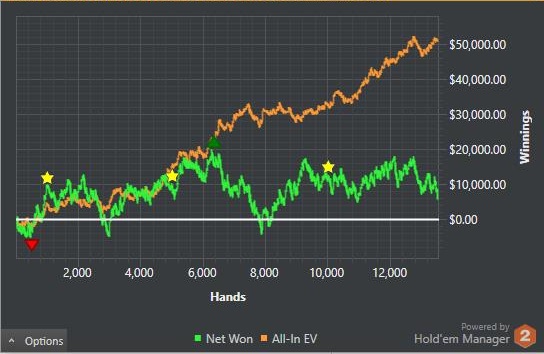
There are two fundamentally different types of downswing, and the correct response to each is different:
Type 1 – Running bad with good play. The EV line is positive; actual results are below it. This is variance. The correct response is to maintain confidence in your process and continue playing your game.
Type 2 – Running bad with poor play. The EV line is also declining. Results and decisions are both off. This requires immediate action: review hands, identify leaks, and fix them. Continuing to grind through this type of downswing compounds the damage.
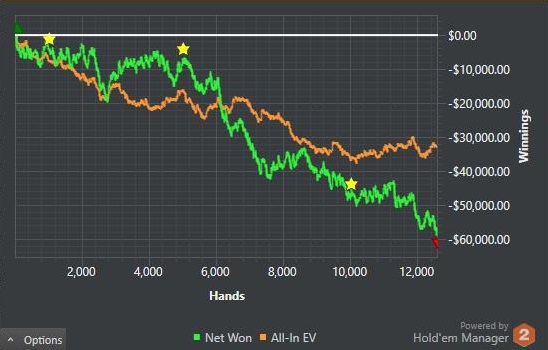
Rule: Before responding to a downswing, determine which type it is. Review your database – ideally with a study partner to reduce bias – and let the EV line guide your conclusion. Never make drastic strategy changes based on results alone.
One practical tilt-control method: begin each session with three chips representing "lives." Each clear mistake costs one. Lose all three, take a mandatory break. The system prevents tilt from compounding before it becomes costly.
The Mental Game: Discipline and Emotional Control
Technical skill determines your ceiling as a poker pro. Discipline determines whether you reach it.
Tilt, the emotionally compromised state triggered by a bad beat or a losing session, is the single most common way capable players destroy their own results. When poker is funding your living expenses, the financial stakes of tilting are compounded significantly.
Mental traits that define successful poker professionals:
- Patience
- Discipline
- Emotional control
- Focus
- The ability to evaluate decisions independently of results
Mental traits that undermine a poker career:
- Result-oriented thinking
- Emotional instability under variance
- Inability to move down in stakes when bankroll management requires it
- Playing for the rush rather than the edge
Treat poker like a business: track every session, handle tax obligations, study consistently, and make decisions based on poker probability and process, not on how the last session felt.
Poker as a Career: Life and Relationships
A poker career places real and specific pressure on relationships. Weekends are peak playing hours. Sessions can't always end on schedule. Live grinders travel frequently and keep irregular hours. These are structural features of the profession, not temporary inconveniences.
Managing them effectively requires:
- Scheduling and protecting poker-free time in advance.
- Communicating the realities of the lifestyle clearly with partners and family before going pro, not after.
- Building a support network of other serious players – ideally stronger than you – for study, accountability, and the social dimension that long online grinding sessions remove.
The solitude of professional poker, particularly online play, is one of its most underestimated challenges. Isolation compounds the psychological impact of downswings and makes it harder to maintain perspective. A strong support network is not optional, it's part of the infrastructure of a sustainable poker career.
Key Takeaways
- A professional poker player earns their primary income from poker and has no guaranteed salary – income is subject to variance at every skill level.
- Poker is beatable long-term because it is player vs. player. A consistent skill edge over your player pool produces profit over a large enough sample.
- Choose one format – cash games, MTTs, or SnGs – and specialise before diversifying.
- Maintain a poker bankroll separate from living expenses. Never mix the two.
- Build a living expenses buffer of at least 6-12 months before going full-time, independent of your playing bankroll.
- Downswings are inevitable. Identify whether you're running bad or playing bad – the correct response is different for each.
- Discipline and emotional control matter more than technical skill at most levels of the game.
- Staking, satellites, and swaps are legitimate tools for managing bankroll risk, particularly in tournament play.
Responsible gambling notice: This article is for informational and entertainment purposes only. Professional poker involves significant financial risk and no guaranteed income. Never gamble with money you can't afford to lose. If you're concerned about your gambling, confidential support is available at BeGambleAware.org or by calling the National Gambling Helpline on 0808 8020 133.
